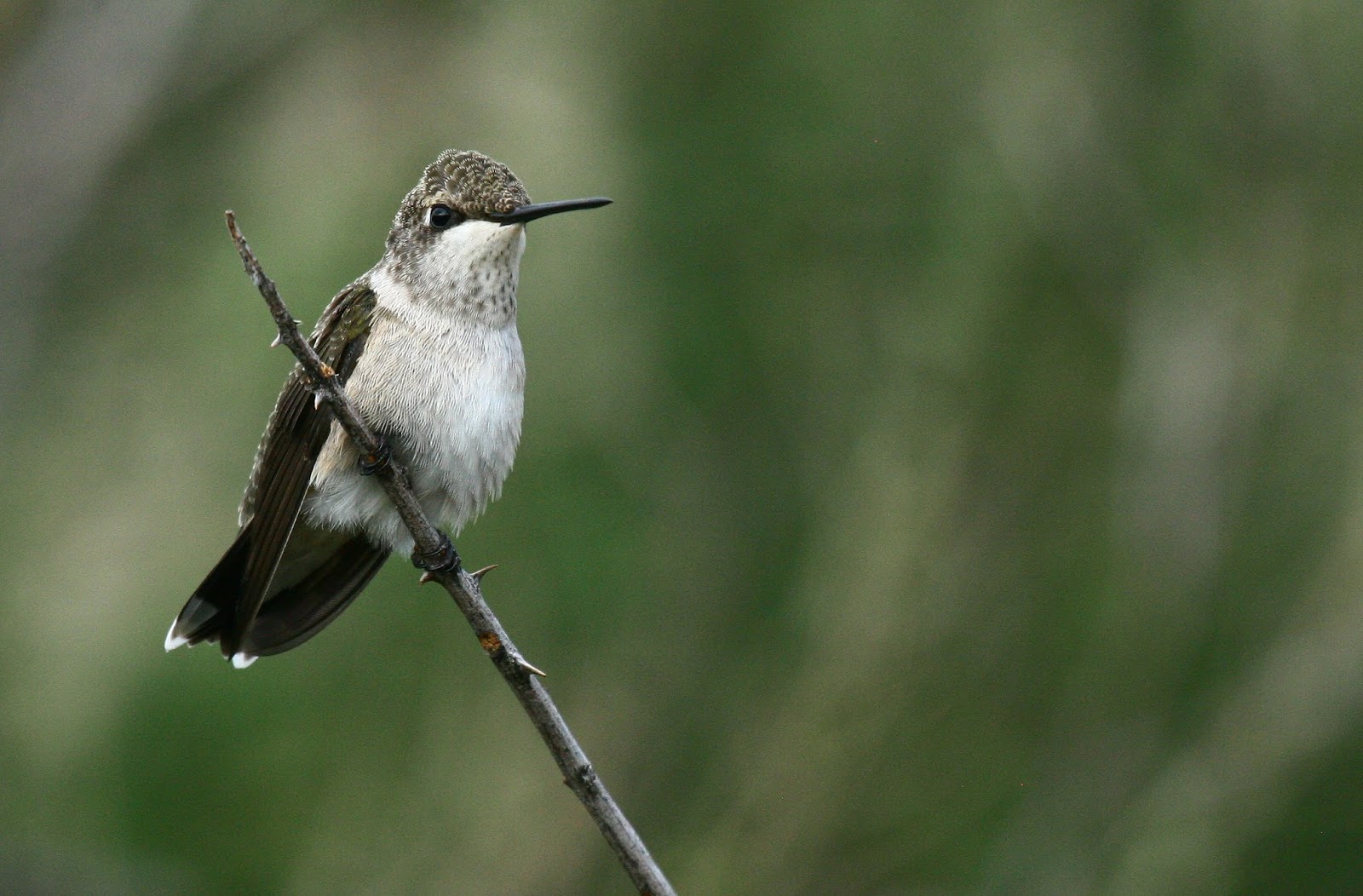
Besides the obvious anxiety over rain and water, tanks leaking, being tied down and can't ever go visit loved ones, there's the unwanted wildlife the oasis attracts. I'm referring to javelina that root around under everything, digging out the mulch and moisture I'm struggling to retain. And the jackrabbit that consumes all the Red Yucca. I've totally given up on growing any of that. The deer were originally a problem, but not so much anymore. Right now, as I write this, some caterpillars are consuming a huge swath of my precious Chinese Pistachio tree.
Even birds can be a problem. Remember the devastation the sapsuckers wreaked on some of my trees? But no one appreciates a good rain like I do. Some people even get depressed on rainy days. And after I started this post I was treated to a good rain that filled my one dirt tank with water. So I'm busy transferring that to another dirt tank and from there to the stucco tank. I'll be up all night pumping, but I never complain about that. This will give me a couple months more water in the spring when I'll need it the worst (if the stucco tank doesn't leak too bad).
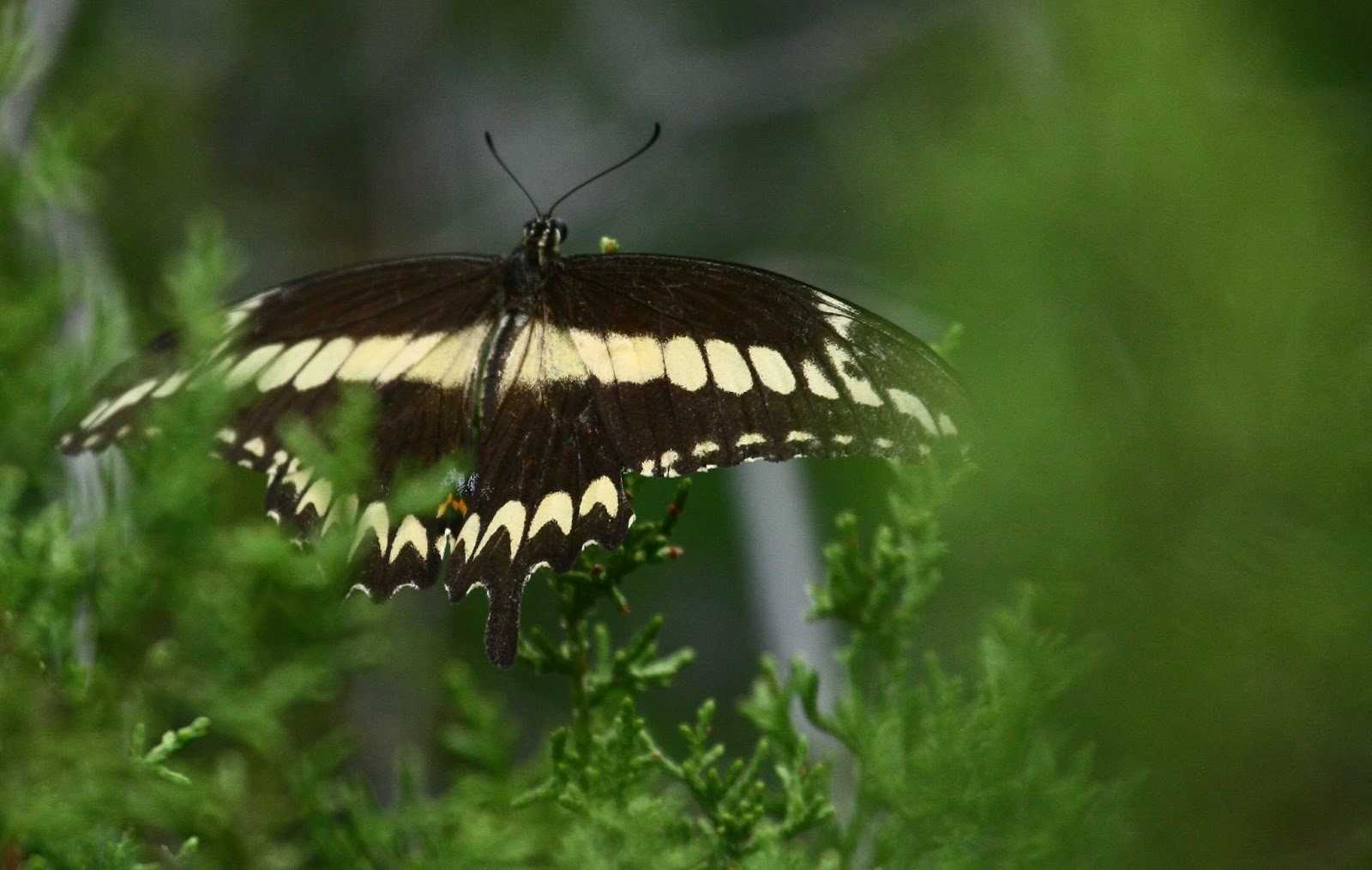
On top of that, I photographed a rare butterfly at the oasis today. It's a funny story. There's this sweet lepidopterist that I send my butterfly photos to ID when I can't. So I sent him some today. I included a photo, of what I believed was a Giant Swallowtail, not to ID, but because I thought it was such an impressive looking butterfly. In my email I said I need help with the others, but I know the swallowtail (meaning "Giant" of course). Immediately I got an email back saying, "Whoa!" And he explained that it was an Ornythion Swallowtail, and why. He wanted me to take more photos to see if he could tell if it's a male or female, but it started raining about then, I lost my internet signal, and had to run to Study Butte for gas for the pumps. Maybe I can relocate it tomorrow.
And when yet another visitor tells me visiting here was the highlight of their trip to the Big Bend, you can bet I've long forgotten the downside.
Wednesday, September 11, 2013
Tuesday, September 10, 2013
Photography practice
Even though the sun never made an appearance today (AND NO RAIN EITHER) I did my best to practice using manual mode. Whenever something appeared that I really wanted a photo of, and didn't want to chance missing out, I switched to Av. But I'm getting more comfortable with manual and don't expect to continue reverting back to my Av comfort zone much longer. Here are a few I took today with manual. I look forward to seeing what it'll do with sunny conditions, and better birds. It seemed like Black-chinneds were all I could get to cooperate today.
I like the size perspective the butterfly in the background gives the above photo. Below is an Eastern Phoebe that showed up today.
Monday, September 9, 2013
Cooler weather
It seems to have cooled off a few degrees, but no rain here yet. Maybe tomorrow.
I'm practicing shooting photos in MANUAL mode, using autofocus, and I think I'm going to like that better than AV mode. May need to take practice shots with each photographic subject for a while, but it'll be worth it if my photography improve.
Here's one I took while practicing. It's a juvenile male Calliope, maybe the same one I shot the other day. Can't wait for morning so I can practice some more. Gotta learn how to stop that wing action.
I bet these Scaled Quail found some Pigeonberries (rivina humilis) that made them so red in the face. In early days the plant was used for red dye and is commonly called Rouge-plant.
![]() |
| Pigeonberry |
Sunday, September 8, 2013
Rain in the forecast
Rain is forecast for all week basically. Today I got a mere sprinkle while my sister a mile away got nearly a quarter of an inch. But even that wouldn't have topped off my tanks that so desperately need it. So here's hoping any day now. These clouds late this afternoon looked promising.
Not much of interest bird-wise. Some migrants moving through and some flycatchers hanging around. I've given up trying to ID empidinax flycatchers.
![]() |
| Bordered Patch |
Saturday, September 7, 2013
Mornings
Mornings are the best time for birding, but early morning light sure doesn't do good for bird photos. It can give scenery a special beauty, I suppose, but I don't like it for what I like to photograph.
Tuesday, September 3, 2013
Good hummer banding day
We caught and banded 6 hummingbird species (Allen's, Lucifer, Rufous, Calliope, Ruby-throated, & Black-chinned) today at the oasis. At another banding site 3 miles south of the oasis Kelly banded this juvenile male Lucifer. It surely fledged early in the season, like April or May. Even though Kelly has banded more Lucifers than any other bander, we had never seen a hatch year Lucifer with more than about six gorget feathers, so this one was a real treat. (Photos courtesy of Kelly Bryan)
Monday, September 2, 2013
Splendid September morning
Now, if it would just rain and fill my tanks, it would be a perfect day.
Lot of early morning activity at what's left of the water in this wildlife pond. Another waterthrush; this time I think, a Northern. But I'm usually wrong.
Speaking of wrong, I'm totally giving up on odonate identification. Here's one I photographed this morning that doesn't look like any in the book. Yesterday I consulted an expert on a different damselfly ID, and he said they're so variable and complicated that sometimes you have to have them in your hand. So, I'll stick to birds, which I'll never master either, of course. But they sing.
As the water recedes there's quite a bit of mud left. And some patches of mud are better than other patches of mud. Luckily, I don't feel a need to understand why.
UPDATE: Waterthrush later confirmed as a Northern Waterthrush.
Sunday, September 1, 2013
One bath deserves another
I was sitting along the edge of the wildlife pond with my camera, watching for odonates to photograph during the heat of the day (95°), when unexpectedly I heard a loud buzz right beside me. Following the sound, I saw a Rufous Hummingbird alight in the mud near my feet, almost too close to photograph.
The hummer seemed to be poking around in the mud a bit, then flitted the couple of feet to the water and plopped down in it, where he then appeared to continue the bathing ritual.
Friday, August 30, 2013
An oasis sort of day
Whenever I'm headed to the oasis after being away for a few days I catch myself singing as the first sight of the oasis comes into view. The road is rough so I force myself to go slow. Today I even forced myself to stop and snap a picture, so I could share the sight that makes me sing. (I only do it when I'm alone, of course. I can't carry a tune, at all.) This shot was taken at 8:00 AM and the light makes things look less green than they actually are, I think. I find it exhilarating to behold my little piece of paradise as the sun comes up over the mountain. As you can see on this photo, I'm driving inside the shadow of the mountain, but will enter the sunlight momentarily.
The early morning promise that met my eyes didn't deliver much. There was the lovely peace and quiet that recharges my batteries, of course, but very few migrants, and it soon got pretty hot. I didn't rush around working all day, like I usually do. I just sort of worked in spurts now and then. Mostly just soaking the place up as best I could. The most interesting sighting was observing the pair of Crissal Thrashers as they foraged most of the day, too hidden by a brush pile for photographing.
There were about 20 hummingbirds vying for the feeders. And I got a short glimpse of a Lazuil Bunting. Saw 3 common warbler species. Here's a juvenile male Allen's Hummingbird that's still hanging around after being banded the other day.
And here's a recently banded juvenile male Lucifer.
Tuesday, August 27, 2013
Hybrid mystery solved
Kelly [Bryan] along with other banders came to band hummingbirds today. It was drizzly and we were barely able to do the banding. His banding locations after mine had to be cancelled due to rain. But he did catch the hybrid. It is, like we thought, a Black-chinned / Ruby-throated. He took lots of in-hand shots. Here are a couple of his excellent photos of it.
For those of you more technically curious, the gorget is a combination of both species. The tail is that of a Black-chinned. The P6 wing feather is that of a Ruby-throated, while the P10 is intermediate. (Thanks to Kelly for the photos and additional info.)
The photo I posted on the 25th is a Black-chinned, and the photo yesterday (26th) is the hybrid. With 3 male archilochus* zipping around, it's hard to tell them apart through the camera lens. That's what caused me so much angst. I was never positive I was seeing and photographing the same bird. But all is well that ends well.
Those of you that follow this blog probably know how I love Soapberry thickets. When we dug out the dirt tank (circa 1996) about a block east of the oasis I planted a couple of hackberry and soapberry trees. At the time, I don't think I knew the latter make thickets. I just knew they grow naturally in the arroyo and thought if I planted them at the edge of the dirt tank they'd get enough water from it to survive, because I wasn't going to haul water to them. They have survived nicely and the soapberry has made a lovely thicket. I don't see it often but it's nice knowing it's there. I saw several bird nests in it today. Can't wait for the one in the arroyo beside the oasis to look this good.
The photo I posted on the 25th is a Black-chinned, and the photo yesterday (26th) is the hybrid. With 3 male archilochus* zipping around, it's hard to tell them apart through the camera lens. That's what caused me so much angst. I was never positive I was seeing and photographing the same bird. But all is well that ends well.
Those of you that follow this blog probably know how I love Soapberry thickets. When we dug out the dirt tank (circa 1996) about a block east of the oasis I planted a couple of hackberry and soapberry trees. At the time, I don't think I knew the latter make thickets. I just knew they grow naturally in the arroyo and thought if I planted them at the edge of the dirt tank they'd get enough water from it to survive, because I wasn't going to haul water to them. They have survived nicely and the soapberry has made a lovely thicket. I don't see it often but it's nice knowing it's there. I saw several bird nests in it today. Can't wait for the one in the arroyo beside the oasis to look this good.
* Black-chinned, Ruby-throated, and hybrid of the two.
Subscribe to:
Posts (Atom)